
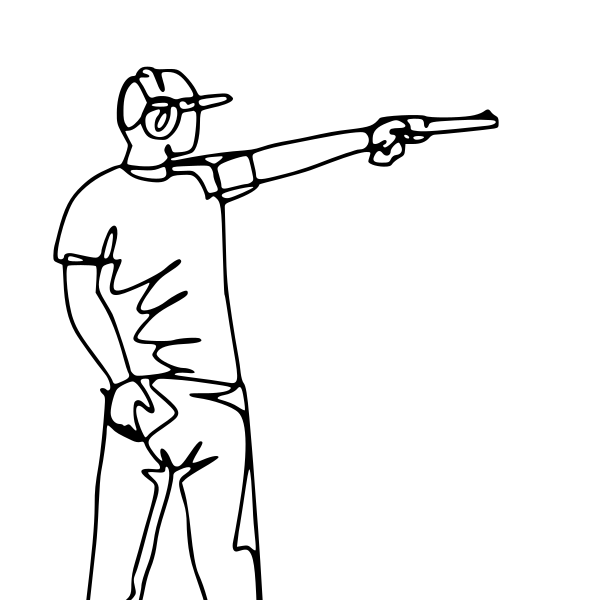

Here’s the expanded coaching context behind that Q&A, explained clearly and tied to established shooting theory.
This answer sounds paradoxical at first—but it reflects one of the deepest technical truths in precision pistol shooting.
What follow-through really means (and what it doesn’t)
Follow-through is not:
- freezing the arm after the shot
- holding the sights artificially still
- a passive “wait” after firing
Follow-through is mental continuity.
It means that your attention, intention, and trigger pressure do not stop at the moment the shot breaks.
Why follow-through affects the shot before it
1. The nervous system doesn’t stop on command
The body cannot instantly switch from “execute” to “relax.”
If the mind anticipates the end of the shot:
- trigger pressure changes
- muscle tone alters
- wrist and fingers react early
This happens milliseconds before the pellet leaves the barrel.
By committing to follow-through, you prevent the mind from “exiting” the shot too early.
2. Good follow-through stabilizes trigger execution
When shooters focus only on making the shot fire, they unconsciously:
- speed up the last trigger phase
- tense the hand
- prepare for recoil (even in air pistol)
When the intention extends beyond the shot:
- trigger pressure stays uninterrupted
- the hand remains neutral
- movement stays predictable
That’s why coaches say follow-through is a pre-shot behavior, not a post-shot one.
3. Presence after the shot reveals execution quality
Elite shooters often describe good shots as:
- “clean”
- “quiet”
- “complete”
That feeling comes from staying mentally present through recoil and pellet exit.
If awareness collapses immediately after the shot, it’s usually a sign the execution collapsed slightly before it.
Why follow-through is the most important habit
Other technical elements can be adjusted:
- stance
- grip
- sight picture
But without follow-through:
- every other technique becomes inconsistent
- pressure increases under stress
- execution degrades in competition
Follow-through is the habit that:
- protects technique under pressure
- links aiming and triggering
- prevents anticipation
That’s why it sits at the top of technical priorities.
Sources & coaching foundations
This principle is consistently emphasized across classic and modern shooting literature:
📘 Master Competitive Pistol Shooting – Ragnar Skanåker
- Defines follow-through as continuation of execution
- Emphasizes mental presence beyond the shot break
- Treats it as a cornerstone of elite technique
📘 The Vital Problems of Pistol Shooting – Anatoliy Piddubnyy
- Explains how anticipation alters wrist and finger movement
- Shows why premature mental “release” causes errors
- Directly links follow-through to shot timing
📘 The Fundamentals of Olympic Pistol Shooting – Željko Todorović
- Places follow-through as the final—but continuous—phase of the shot
- Emphasizes uninterrupted motor execution
- Warns against mental disengagement at the shot break
📘 On the Firing Line – J. P. O’Connor
- Describes elite shooting as execution without interruption
- Highlights how attention after the shot protects execution before it
Coach’s takeaway (why the Q&A is phrased this way)
The short answer is intentionally instructional:
If you want better shots, don’t try to control the instant of firing. Commit to staying present after it.
That single habit quietly improves:
- trigger continuity
- stability
- performance under pressure
And that’s why, from a coaching perspective, follow-through is the most important technical habit.