
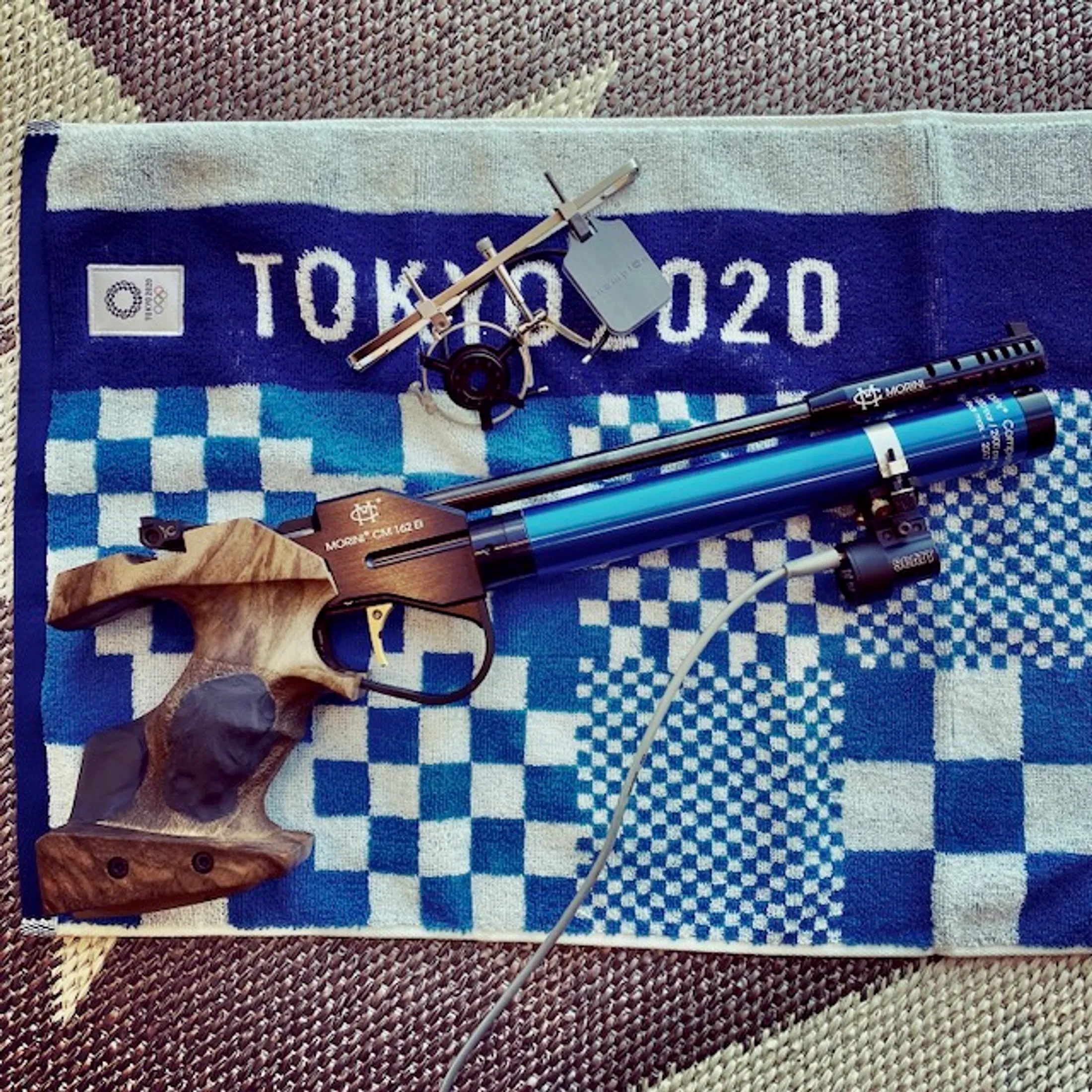
Dry fire is often described as important.
Much more rarely is it explained how to do it correctly.
Dry fire does not improve technique by itself. It only reveals what your execution already is. When done well, it becomes one of the most powerful training tools in pistol shooting. When done poorly, it reinforces bad habits quietly.
This article explains how to dry fire properly, and how to use SCATT or Noptel to sharpen its feedback without becoming dependent on data.
Dry Fire Is Execution, Not Rehearsal
Dry fire is not pretend shooting.
It is real execution without recoil.
That means every dry-fire shot should include:
- full stance
- full grip
- full aiming process
- uninterrupted trigger pressure
- complete follow-through
If a dry-fire shot would be unacceptable in competition, it is unacceptable in training.
Dry fire does not forgive shortcuts. That is why it works.
1. Use a Clear Visual Reference
Dry firing into empty space removes feedback. Always use a defined aiming reference:
- a blank wall with a small dot
- a reduced target
- a training card
The goal is not to hit anything.
The goal is to observe alignment and movement.
Without a reference, many errors go unnoticed—especially anticipation and grip interference.
2. Observe the Sights Through the Trigger
The most important question in dry fire is not where the sights are, but what they do.
Watch for:
- dips or jumps at the click
- lateral movement
- sudden acceleration
These movements reveal:
- trigger interruption
- grip over-activity
- mental urgency
If you stop watching the sights, dry fire loses its value.
3. Commit to Follow-Through
Dry fire makes follow-through unavoidable.
Because there is no recoil, any:
- early relaxation
- trigger release
- mental disengagement
is immediately visible.
After the click:
- keep pressure
- keep alignment
- stay present briefly
Follow-through is not something you add after the shot.
It is something you commit to before it.
4. Keep Series Short and Honest
Quality beats volume.
Effective dry fire looks like:
- 5–10 shots per series
- short pauses between shots
- frequent resets
Stop when execution degrades. Fatigued dry fire trains compensation, not consistency.
Most elite shooters prefer multiple short dry-fire blocks rather than long sessions.
Dry Fire with SCATT / Noptel: Turning Awareness into Data
Dry fire already removes recoil and noise.
SCATT and Noptel add objective visibility.
Used correctly, they do not change dry fire—they confirm it.
What to Look for in Dry-Fire Traces
Ignore score. There is no score in dry fire.
Focus instead on patterns.
1. Pre-shot stability
Look at the final second before the click:
- Does movement slow naturally?
- Is the pattern repeatable?
- Or does it become erratic as pressure increases?
Instability here usually indicates tension or hesitation, not aiming error.
2. Trigger influence
At the click:
- does the trace jump?
- dip?
- spike sideways?
These movements confirm:
- grip interference
- trigger interruption
- anticipation
Dry fire shows the problem.
SCATT/Noptel shows when it happens.
3. Follow-through continuity
After the click:
- does the trace continue smoothly?
- or collapse immediately?
A collapsing trace almost always means:
- early mental exit
- trigger release instead of continuation
- incomplete follow-through
This is one of the clearest diagnostics dry fire can provide.
How to Integrate SCATT / Noptel Without Becoming Dependent
A simple and effective loop:
- Dry fire without the system (5–10 shots)
- Add SCATT/Noptel and repeat
- Compare feel with trace
- Remove the system and repeat again
This teaches you to:
- trust your perception
- verify it objectively
- avoid chasing traces
The system does not teach technique.
It only reveals it.
Common Mistakes to Avoid
Dry fire with optoelectronic systems loses value when shooters:
- shoot the trace instead of the process
- correct movement in real time
- stare at numbers instead of patterns
- change technique too quickly
Improvement does not come from reacting faster.
It comes from understanding better.
Let patterns emerge before you intervene.
Coach’s Perspective
Dry fire does not make shooting easy.
It makes shooting honest.
SCATT and Noptel do not replace that honesty.
They sharpen it.
If your dry fire is calm and repeatable, live fire becomes confirmation—not compensation.
References & Coaching Background
The principles in this article are consistent across elite pistol coaching literature:
-
Master Competitive Pistol Shooting – Ragnar Skanåker
Emphasizes dry fire as the primary tool for stabilizing trigger control and follow-through. -
The Vital Problems of Pistol Shooting – Anatoliy Piddubnyy
Explains why anticipation and trigger disturbance are most visible without recoil. -
Working with SCATT – Tricia van Nus Demonstrates how optoelectronic systems reveal execution errors before live-fire results appear.
-
The Fundamentals of Olympic Pistol Shooting – Željko Todorović
Places dry fire at the center of long-term technical development and execution consistency.