

Session overview
Discipline: 10 m Air Pistol
System: SCATT Pro AP10
Shooter: Mikhail Nestruev
Date: 1997-04-16
F coefficient: 15
Shots analyzed: 60 (valid competition shots)
Score: 579
Source: AP10 - Nestruev Mikhail (1997-04-16) | SCATTDB
This session is a good example of high-level air pistol shooting executed with a natural rhythm, rather than forced stillness.
Refer to the SCATT Expert 2026 for definitions of all metrics used in this analysis.
You can download this any many other SCATT sessions in ematch. Import them into SCATT Expert for your own analysis. Look for patterns and consistencies.
Key session statistics (SCATT display units)
- Average score: 10.12
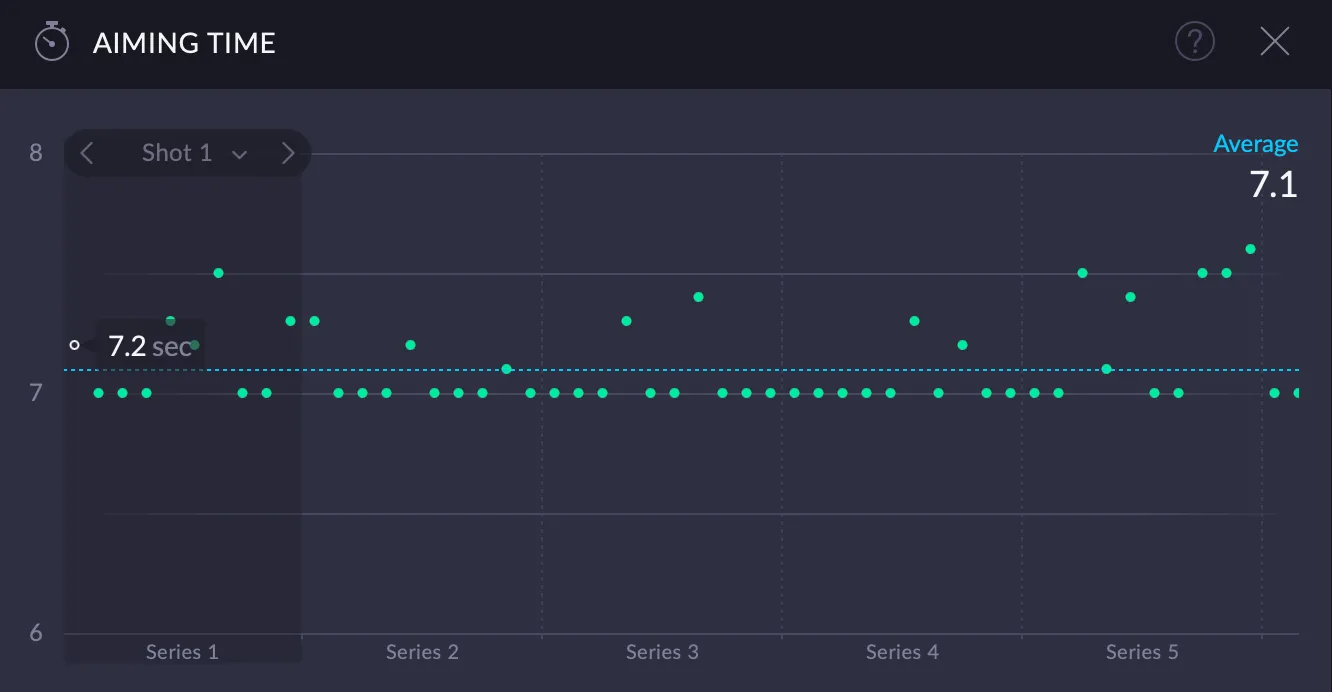
- Average aiming time: 7.1s
- Average S1: 96.3 mm/s
- Average S2: 93.1 mm/s
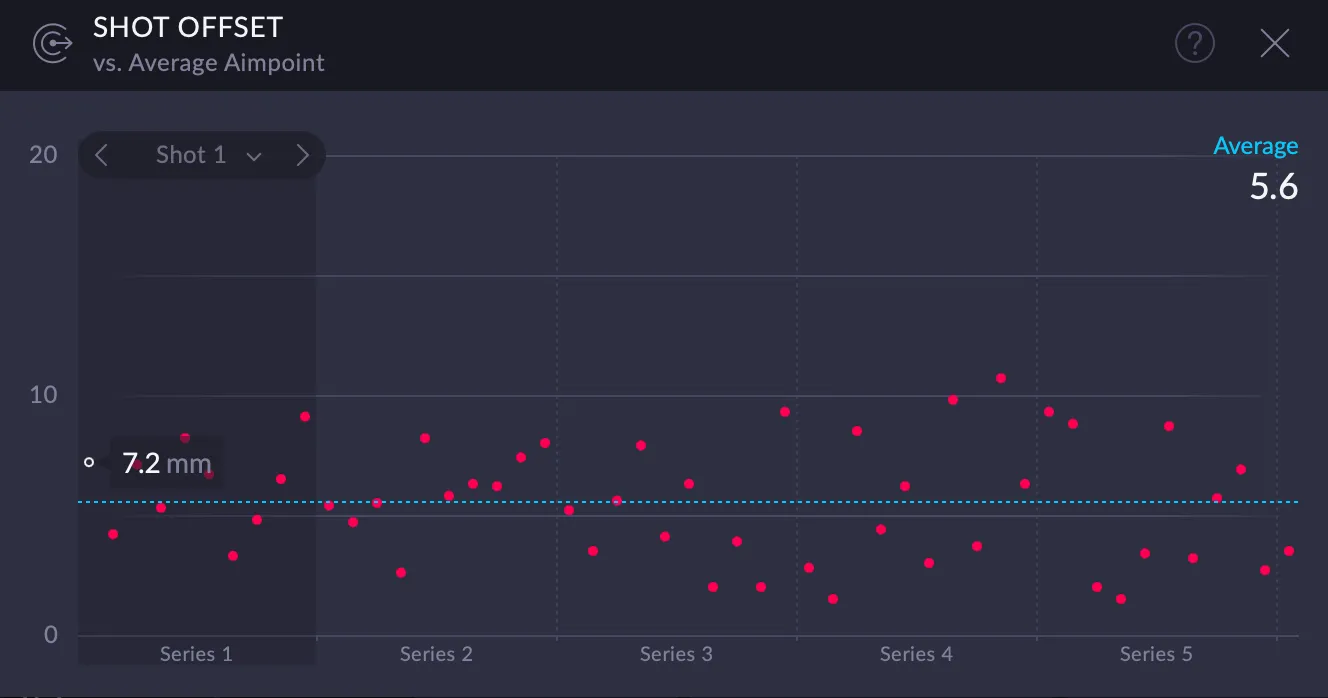
- Average DA: 5.55 mm
- Hold within Relative 10 (10a0): 88.0 %
Screenshot from SCATT Expert




Step 1 – How stable was the gun?
Indicators used:
→ S1
→ Hold within Relative Z / Relative 10
Observations
- S1 ≈ 96 mm/s
- Relative 10 hold ≈ 88%
This indicates:
- A very stable postural and grip system
- Significant reserve stability (the gun spends most of the time inside the shooter’s natural hold area)
- No evidence of excessive sway or loss of balance
For live 10 m air pistol, these values are fully consistent with international-level control when the shooter is not forcing stillness.
Conclusion (stability)
The gun was stable enough to shoot tens on every shot.
Stability is not the limiting factor in this session.
Step 2 – Did the trigger disturb the shot?
Indicators used:
→ S2 vs S1
→ DA
Observations
- S2 ≈ 93, slightly lower than S1
- No systematic S2 spikes relative to S1
This relationship is critical:
- S2 ≈ S1 or slightly lower
→ Trigger action is neutral - No sign of trigger jerk or grip collapse
- Trigger release occurs within existing movement, not by adding movement
Conclusion (trigger)
The trigger did not disturb the gun.
Trigger technique is clean and efficient.
Step 3 – Was the decision made at the right moment?
Indicators used:
→ DA
→ Aiming Time
Observations
- Average DA ≈ 5.5 mm
- Aiming time ≈ 7 s, this places the session firmly in the optimal aiming-time window for elite 10 m air pistol shooting.
At first glance, DA ≈ 5.5 mm may look “high” for an elite shooter.
However, context matters:
- Hold quality is very high
- Trigger is neutral
- DA is consistent and score-dependent
- Higher scores correspond to lower DA
This tells us the following:
Shots are released during controlled movement,
but not always at the optimal phase of that movement.
This is not a technical failure — it is a timing / decision margin.
Elite shooters do not freeze the gun; they release during motion.
DA does not collapse to zero at this level — it becomes consistent.
Conclusion (decision)
The limiting factor in this session is shot timing precision,
not stability or trigger mechanics.
Putting it together – the full diagnostic picture
| Question | Answer |
|---|---|
| How stable was the gun? | Very stable (high Relative hold, controlled S1) |
| Did the trigger disturb the shot? | No (S2 ≈ S1, no spikes) |
| Was the decision made at the best moment? | Usually yes, but not always (DA shows timing spread) |
What this session does not need
Based on the data, this session does not benefit from:
- More stillness training
- Trigger isolation drills
- Grip force changes
- Reduced movement amplitude
Chasing lower S1 or lower DA numerically would likely reduce performance, not improve it.
What this session does point to
If this were a training focus, the most relevant work would be:
- Decision-making under stable conditions
- Confidence in releasing earlier inside acceptable movement
- Avoiding unnecessary prolongation of aiming time
In other words:
Refining timing, not rebuilding technique.
Final takeaway
This SCATT session is a textbook example of elite air pistol execution:
- Stability is present
- Trigger is neutral
- Performance is governed by timing margins, not mechanics
SCATT confirms that:
At the highest level, improvement comes from when the shot is released —
not from trying to make the gun “more still”.
End of analysis