
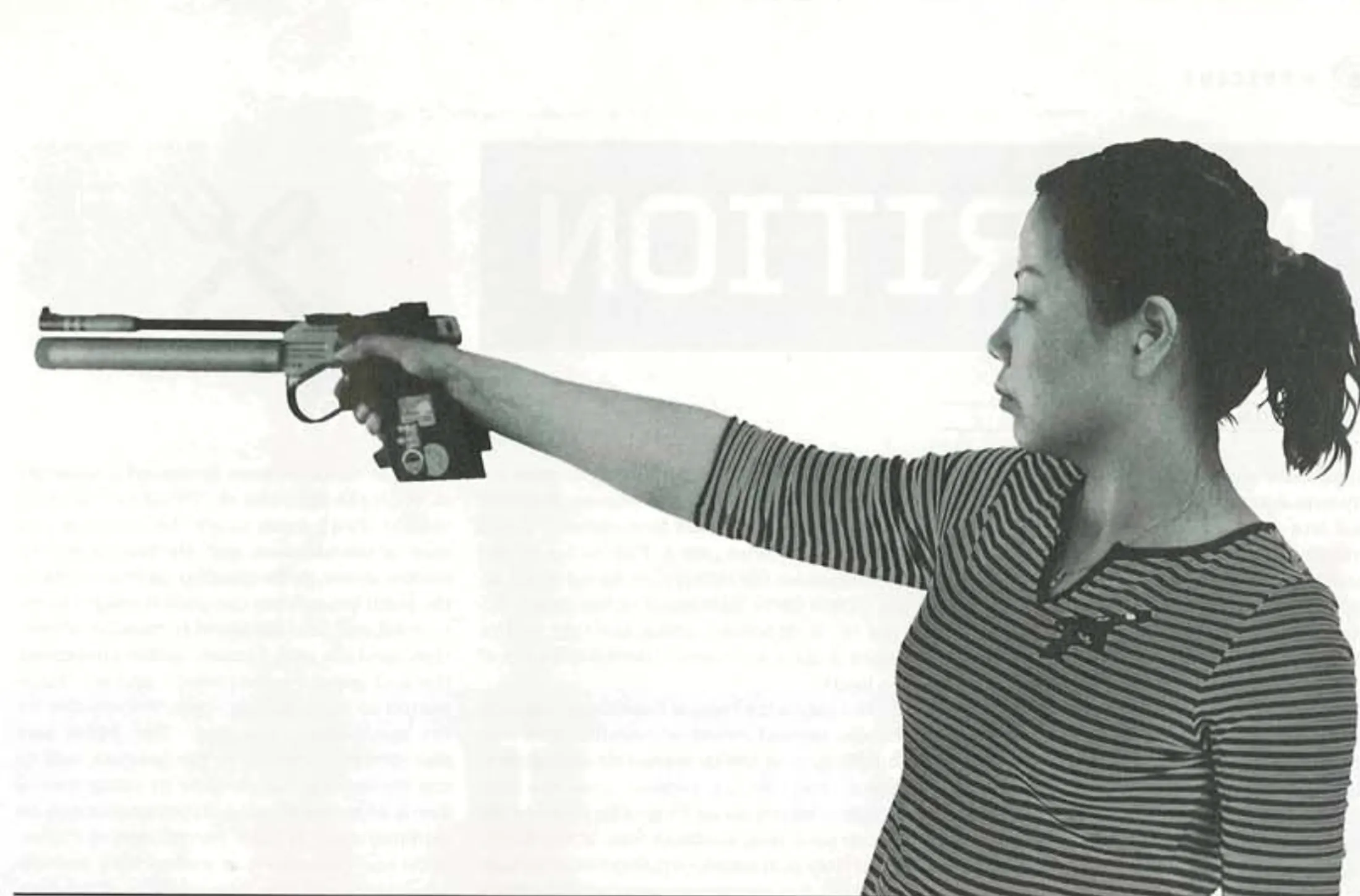
This article explores the journey of Tao Luna (陶璐娜), one of China’s most accomplished female pistol shooters. Drawing on insights from her coach, it highlights the key factors behind her selection, training, and psychological preparation that led to her Olympic success. The article offers valuable lessons for athletes and coaches aiming for excellence in competitive shooting.
First published in ISSF News 2005 01.

🥇 2000 Sydney Olympic Games – 1st 10m air pistol
🥈 2000 Sydney Olympic Games – 2nd 25m sport pistol
Read Anatoliy Piddubnyy’s reflection on Tao Luna’s rapid shooting performance in Sydney: The importance of rapid shooting in 25m sport pistol
ISSF News 2005 01, Coaching
Xie Qianqiao - Shanghai shooting and archery center
The author recalled the selection and the long-term systematic training for Tao Luna and stressed the importance of emphasizing basic technical training and psychological training of elite shooters in order to improve their comprehensive competitive capability.
Tao Luna is one of the most outstanding women’s pistol shooters in China; she has earned the title of world champion many times and has broken the world record. Especially at the Sydney Olympic Games in 2000, she won the first gold medal for China. By recalling the selection and the long-term technical and psychological training of Tao Luna, I want to share the experience mentioned below with all members of the shooting community.
1. STRESSING SHOOTER’S PSYCHOLOGICAL QUALITY DURING THE SELECTION
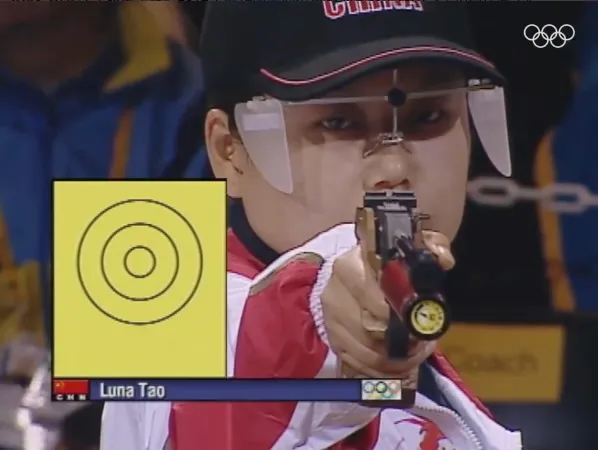
A shooter who wants to obtain good results during shooting events must have a good psychological profile, thus I stressed psychological factors during the selection of Tao Luna as a talent. At the summer term in 1990, I started a collective training course in women’s sport pistol and air pistol for the Shanghai shooting team at the shooting range of Luwan District. I found that Tao Luna was a potential shooter and later on chose her to take part in the training camp organized by the Shanghai shooting team. There she proved to be a professional athlete at the end of 1992. In retrospect, besides her good results, the main reason that I selected her as a team member was that she had the following psychological qualities:
1.1 GOOD PERSONALITY
During the collective training, I organized the athletes to go to Shanghai Sport Science Institute to take part in a personality test through Cattell’s Sixteen Personality Factors Questionnaire (16PF). Tao Luna scored ten at factors C, E, F, and H, which suggested that she was in a good mood most of the time, persevering, relaxed, enthusiastic, and courageous. She scored 1 at factor O, which suggested that she was very confident. Wang Huanyu, a researcher at the Shanghai Sport Science Institute who conducted the test, predicted that among 8 shooters who took part in the psychological test, Tao Luna would perform best during shooting events in the future.
- C (Emotional Stability): Calm, stable, and resilient under stress.
- E (Dominance): Assertive, competitive, and independent-minded.
- F (Liveliness): Enthusiastic, spontaneous, and cheerful.
- H (Social Boldness): Confident, adventurous, and unafraid of new situations.
- O (Apprehension): Low score indicates self-assurance and confidence.
1.2 STRONG WILL
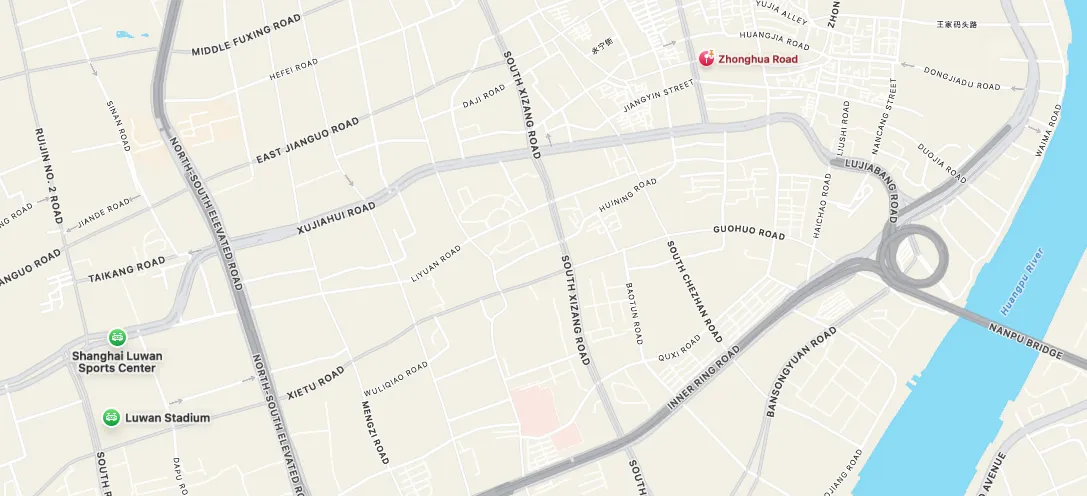
During the summer term training, Tao Luna lived on Zhonghua Road. In high temperatures, she had to hurry to the shooting range of Luwan District before 8 o’clock every day, train until 12 o’clock, and then go home hungry. She had to ride 10 kilometers every day. It was really a hard time, but she persisted and never gave up. For instance, at one time she got a fever and felt bad for several days, but she did not stop training. Her strong will to overcome difficulties impressed me very much.
1.3 THE PASSION AND CONSTANT PURSUIT OF SHOOTING
After term training, she trained as a day-trainee. She lived at the Shanghai shooting range (the former name) at that time; she had to go to Datong Middle School located in the southern downtown area for study every morning, came back to the shooting range at noon, trained in the afternoon, and arranged additional training at night. She needed to cover two districts and the round trip cost her two hours every day.
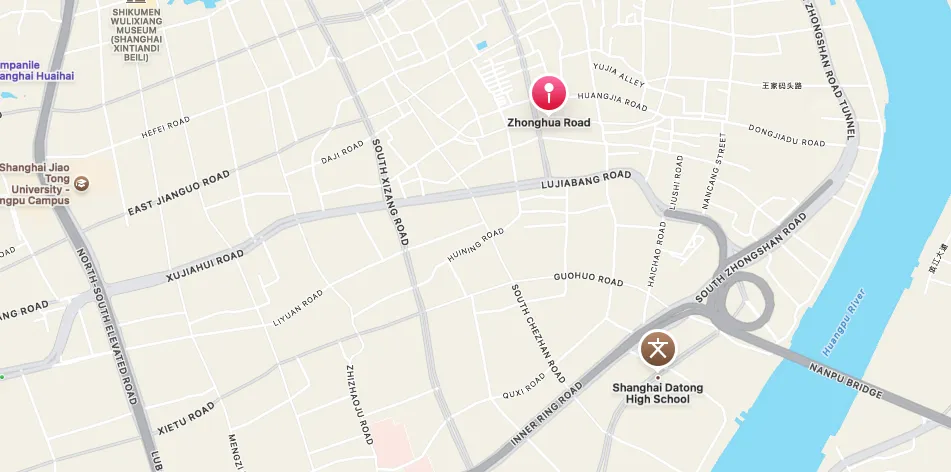
In half a year of day-training, she proved her spirit and this hard time strengthened her strong will, which helped her to build a strong basis for subsequent training. In training, she was serious and diligent. Psychologically, her interest in the shooting sport turned into the desire for good achievements and set goals in her mind.
In the second part of the year 1991, she consciously asked for whole-day training as she thought that half-day training was not sufficient for her. With approval of the officials, she started to train together with the senior shooters from February 1992 onward. From that time, her training became organized.
After she became a professional shooter, she stated that she planned to surpass her teammate, Wu Yueru, but I suggested she better try to surpass Li Duihong (the Silver medalist in the Sport Pistol event at the 25th Olympics). Her goal was to take part in the collective training of the national team and to attend the Olympic Games. Step by step, she tried to improve and perfect herself constantly. She never gave up her goal although she met difficulties and frustrations. Suffice it to say, she could not perform at the 7th National Games and she lagged behind at the tryout for the 26th Olympic Games. She lost the world tournament and the Asian Games in 1998, but all of these disappointments could not shake her faith in success; she still tried and pursued her significant life all the time, as she described it in her notebook:
A piece of wheat kernel had three fates: either to be put into a gunny bag for the food of pigs, to be ground to flour and made into bread, or to be buried in the earth to sprout and produce more wheat kernels. I liked this piece of kernel, but the difference between us was that the kernel had no will and could not choose its own fate, but I could.
2. INCREASE BASIC, SYSTEMATIC AND TECHNICAL TRAINING
Shooting has a simple structure technique, but it has a high demand for precision and accuracy in motions. The main technical features of shooting are that the subsequent motions must be as similar as possible compared with the previous ones. It means the repetitions must be very similar. It does not allow any deviation between motions, which makes it very difficult. The training for Tao Luna began with basic training to master correct technical motions. On the basis of the following general rules, I summed up some previous experiences and increased the basic and systematic training on technique to help her gradually master the shooting technique which only world-class top shooters achieve.
2.1 THE STAGE FOR BASIC TRAINING
From September 1990 to 1991, Tao Luna went through half-day training every day. The training during this period just analyzed the basic (partial) and whole technique of a series of motions. The main tasks were to master the basic technique, to improve specialized endurance, and general sport capability. I also added some comprehensive training for her according to the different demands of different stages to check her competitive capability and to prepare for the coming competitions.
At that time, I arranged some tests for her as a new junior shooter. Her average achievements for the team tests were 367.1 points for 40 shots Air Pistol and 561 points for 60 shots Sport Pistol, respectively, in 1991.
She persisted with the basic and technical training in 1992, attended a shooting tournament of the associated areas of the east of China, and also attended 8 team tests. She got average scores of 374.65 points for Air Pistol, which were 7.5 points higher than those in 1991 (the highest scores were 382 points in team tests), and got average scores of 572 points for Sport Pistol, which were 11 points higher than those in 1991 (the highest scores were 583 points in team tests).
In the National Games in 1993, although the training for her had reached a higher level, I did not urge her to improve her sport achievements but stressed the development of her basic shooting technique. Although she did not give up any chance for good results and tried her best at the tryout of the 7th National Games and Shanghai Championship Games, she always told herself that she must master basic technique well in order to improve her results.
Through 3 years’ training on basic technique, she built a mature cognition and reaction system for the right technical motions. She made great improvements in training and could command key technical skills while shooting. She scored 378.37 points for 40 shots Air Pistol and 579.5 points for Sport Pistol as the average achievements in the whole year 1993. From that time on, she reached the high level of a first-class shooter in these two sport events.
During the basic technical training, I focused on standardizing her technical motions. As one feature of the shooting sport is the high demand for precision, the technique is fairly simple, not complex, and the training method is also very easy, but the key point is the need to repeat one motion over and over again. The difficulty lies in the very similarity of every repetition. The high quality of motions relies on consistent and precise repetitions.
Following this principle, according to Tao Luna’s psychology, physique, and arm strength, I taught her the steady shooting style, emphasized shooting steadily and naturally, required the hand to hold and aim the pistol at the target and not to move at the moment of releasing the shot in order to guarantee a score of 10. Consequently, I instructed her to pay more attention to the rear sight picture while aiming; it should be straight, in-focus, and precise, without any deviation permitted. The target for aiming must be an area, and the range of this area should be adapted to the steadiness.
Furthermore, I instructed her to draw the front sight straight back and not to distract forward, as drawing back the sight will benefit the pistol’s steadiness. I also instructed her to focus on the pistol hand and the trigger forefinger, to perform a good motion of keeping strength and squeezing the trigger right backwards with the pistol steady to release the shot unconsciously and naturally. During the whole training process, I always instructed her to be calm, relaxed, and balanced and keep a good mood in order to maintain good motions, which always should be standardized and automatic.
From 1993 to 2000, she won the Olympic gold medal. The only thing practiced during her training was just to repeat one motion over and over again and make it more and more precise. For instance, she summarized briefly in her shooting diary in 1994:
The improvement of slow shooting lies in squeezing the trigger and drawing back the sight; these two motions are absolutely necessary and coordinate for every shot. The better the drawing back of the sight, the steadier the pistol. Until now, I still stress squeezing the trigger, squeezing it very tightly before raising the pistol.
In 1996, she summarized the whole year’s training as follows:
My correct motion for slow shooting is to draw the front sight straight back, to squeeze the trigger tightly, to release the shot steadily and naturally. For Air Pistol, to squeeze the trigger tightly, to draw the front sight straight back, to release the shot steadily and naturally, and also focus on keeping this state at the very moment of releasing the shot.
Until the year 2000, before the Olympics, she wrote about the technical motion procedure:
While the sight on the pistol drops at the bottom of the black bullseye, just stop there and then release the shot immediately. During this whole process, do not lose the forefinger, especially at the bottom of the black bullseye. Squeeze the trigger constantly with the forefinger, be calm, draw back the front sight, and keep this state at the very moment of shooting.
2.2 THE STAGE FOR IMPROVING TECHNICAL SKILLS
Since winter training in 1994, under the scientific instructions of “starting from difficulties, starting from strictness, starting from practice and increasing training amount”, I have stressed the improvement of shooting scores while enhancing the basic technical training, I built a motivation system according to the related psychological theories.
After winter training, Tao Luna made great improvement in two team tests, as at that time, Wang Yueru first got good scores of 587 points and 588 points in Sport Pistol, Wang’s achievement inspired all the athletes of the whole team including Tao Luna. From then on, Tao Luna got the good score of 592 points in Sport Pistol in a “Simulative Tournament” held in Jinan, China in April.
She watched the “UIT World Cup” held in Beijing in May, participated in the Shooting Tournament of the Associated Areas of the East of China held in Nanchang City of Jiangxi Province in June, took part in “Shanghai - Hong Kong Cup Shooting Tournament” held in Hong Kong in July, shot in the tryout of National Shooting Tournament held in Beijing in September, and then participated in the National Shooting Tournament held in Chengdu of Sichuan Province in November.
All of these tournaments toughened her, let her learn a lot and improve much, and also firmed her belief of being one of members of the National Shooting Team and the number one shooter of Women’s Pistol event. Furthermore, she went into training for the stage of consolidation of right technical motions which became more automatic and reached a higher level.
2.3 THE STAGE FOR IMPROVING COMPREHENSIVE COMPETITIVE CAPABILITY
In December of 1994, I took Wang Yueru and Tao Luna to Beijing to take part in the collective training camp preparing for the 26th Olympic Games, afterwards in February of 1995 we decided to let Tao Luna go on her second stage training for the Olympic Games. However in June, she failed in the tryout for the Olympics and came back to Shanghai for training.
Within half a year, Tao Luna participated in two tryouts for the Olympic Games which offered intensely competitive training circumstances to let her accept intense training for competitions, tested her and gave her a lot of experience. She participated in the ISSF World Cups held in Germany and Italy in June, which broadened her horizon. Moreover, she learned a lot from competitions, improved her comprehensive competitive capability and increased her experiences for competitions.
When she trained in Dynamo Shooting Club of Moscow in June 1996 in Russia, she participated in the Russian Shooting Tournament in which five countries including Russia (belonging to the former Soviet Union Republic) took part. With a good score of 588 in the qualification round plus the final score of 100.9 (10 shot final was precision shooting at that time), she defeated the well-known world-class shooters of Russia and won her champion title in Sport Pistol women. She also seized the second place on Air Pistol women with a qualification score of 387 plus the final score of 98.4.
She improved her comprehensive competitive capability in the ISSF World Cup Final and won the victory in the Sport Pistol women in September 1997.
3. INTEGRATING COMPREHENSIVE TECHNICAL TRAINING WITH COMPETITION, EMPHASIZING PSYCHOLOGICAL TRAINING.
The athlete’s psychology is more important in shooting events than in other sports; therefore, I paid close attention to mental training by integrating technical training with competition. This training type proved to be right for Tao Luna. In the Sydney Olympic Games, Tao Luna’s fine psychological state impressed us very much. This was because I integrated for her technical training into psychological training and she also did mental training on her own initiative over a long period of time. Since 1980, I was the first to research the method of integrating technical training with psychological training. I also invited sport psychologists to teach and instruct the team athletes.
In the nineties, while carrying out the special training for Tao Luna, I intentionally added some psychological training. At first, I taught her the skills of being relaxed. Meditation also required her to be calm once she entered the shooting range.
On the basis of Tao Luna having mastered the relaxed training skills, I carried through the visualized training in daily technical training, integrating closely psychological training with technical training. For instance, when the flowing performance appeared during training, I asked her to stop at once and close her eyes to feel the just finished procedures of motion carefully and seriously, to recall motions about 10 to 20 shots as well, and subsequently practice with true targets and live firing or dry firing without true target according to the former motion.
After she has primarily built a mature cognition and reaction system I just required her to be calm and concentrative before and during the training and shooting, then go on the correct, ideal visualized training and feeling to exert muscle’s strength. After the series of psychological training for her, I asked her to shoot with true target and live firing or just preview with dry firing and urged her to take note of fine technical motions.
Furthermore, I required her to make full use of the time of noon-break, before going to bed in the evening and while waking up in the morning to carry out technical visualized training on correct motions. I also improved her psychological adaptability towards competitions by enhancing training intensity and a series of simulative competitions.
Through the long-term practice, I realized the importance of cognitive psychology for improvement of performance and considered cognitive training to be more important than basic technique. Accordingly, this principle and method of cognitive training helped her to treat the competition, public opinion and pressure in a right way and to treat the physical phenomena of the fast beating of the heart, hyperkinesis of the muscles and turning red of the ears in a right way.
I required her to think about how to perform correct technical motions but the scores through the cognitive training. I also required her to put other thoughts aside, get down to the procedure of motions during competitions and tests.
Through training over 6 years, Tao Luna had formed a complete system for competitions and the correct and stable cognitive psychology, suffice to say, she focused on performance delivery as opposed to performance outcome and never worried about scores, which just was the key for her being able to succeed many times.
For instance, at the Tournament of the East of China in June, 1994, she summarized:
I do every motion according to the preparation, what I understand most are right motions and ideas, before the start of tournament till the end of tournament, I am always taking my training notes, I read it over and over until I remember right ideas about motions and right methods deeply by heart, I recite these notes as long as I am free. I pay all my attention to performing motions during tournament while these notes seem like broadcasting from a tape recorder and tell me how to perform.
Through her long-term psychological training, Tao Luna was keenly aware of the importance of psychology for a shooter. She studied psychological training and the skills about self-adaptability consciously, she made good use of the experience from practice, in 1996 she summarized her experiences and understanding towards competitions as: “All the competitions held from 1994 to 1996 let me learn a lot and accumulate my experiences for tournament. I am sure there are many factors to affect competitions from different sides.
In the first place, you must have systematic training programs set out before major competitions. Your attitude toward training both have to be serious and relaxed. In the second place, you must keep a good mood and be confident. In the third place, you must keep the normal mind and not to expect too much from the results, just look at it as a very normal thing (in fact, I just consider the competition as common training, let it go on naturally), otherwise, the results will just the opposite.
In the fourth place, when the competition goes smoothly, you should not take great pride and mind the scores too much. When meeting some obstacles during competition you do not lose confidence but go on trying till the last shot. The only thing to be done is to focus on the right motions.
In the fifth place, you have to avoid intentionally asking for the results and to mind other competitors’ scores before competition, during competition and after competition, In the sixth place, you must not let the results of the previous competition affect the next and you should not think of anything else but to perform during competition. Finally, after a competition ends you should give a summary of it and bear in mind or note the lessons you have learned from the competition.”
Tao Luna posted a big slogan of the way to success is in my mind on the wall in her dormitory in 1996, It told us she had laid emphasis on the importance of psychological training and had fully understood about psychological training.
When she was in Shanghai, she called especially on some sport psychologists and asked for their instructions. After she was selected to the National Team she accepted consciously the guidance from Professor Liu Shuhui for a long time. She wrote the guidance on notebooks to follow during competitions.
For instance, while preparing for the 27th Olympic Games, she took the initiative to ask Professor Liu Shuhui for the psychological consultation. She asked the professor how to achieve the “Wolunda” psychological state during shooting in competitions. The professor told her:
to think nothing but perform the current technical motions
This was written on her notebook and competition scheme, After arriving in Sydney, when she was off training, she listened to the tape-recording about Professor Liu’s reports alone in the room till the day before the competition.
At last, she succeeded by following these instructions. She said:
I succeeded, because I put everything aside, I didn’t think much about the result of the competition, I just tried to conquer myself and do my best to perform every motion well.
At present, Tao Luna has already qualified for the upcoming Athens Olympic Games. If she is in good shape, she will win her victory again.
When the reporter asked her by what psychological state she wants to surpass the outstanding achievement that she got in 2000, she pondered for a while and answered:
There is a natural law for the shooting sport, i.e. if you are more anxious for the champion, the result will be much worse. However, this will let me be aware of its importance and be alert. I will put all my energy on focusing on the motions and not care about much result. I will implement this idea during daily practice and develop a good psychological state during competitions, From now on, I am preparing for both success and failure.
I know that we shoulder heavy responsibilities. I wish her as always to make great efforts to gain the gold medal of the Olympics.
4. CONCLUSION
Through the selection and long-term systematic training for Tao Luna, I realized it is correct to have laid emphasis on her good personal characteristics, her strong will and her passion on shooting sport, which is the important basis for her to be selected and trained to become a world-class elite shooter subsequently. Based on this, I stress the basic and systematic technical training, to integrate technical training with psychological training and the experience of improving her comprehensive competitive capability conforms to the natural law of the shooting sport, which is also the necessary step for a beginner to become a good shooter. I hope these successful experiences can be a reference to the selection and education of shooting talents in the future.
Xie Qiangiao
born in August, 1934, in Ningbo, China.
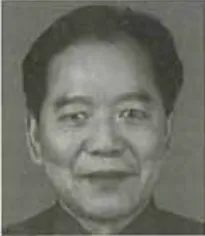
Profile
Xie Qiangiao | CHN
- Born: August 1934, Ningbo, China
- Role: Assistant Coach of the Chinese Shooting Team
Education
- National Diploma, Shanghai Sport University
Shooting Career & Activities
- 1958: Took up shooting
- 1961: Awarded the National Master of Sport title
- 1978: Pistol Coach of Shanghai Shooting Team
- 1980–1993: Head Coach of Shanghai Shooting Team
- 1991–2003: Women’s Pistol Coach of Shanghai Shooting Team
- 1998: Awarded the National Coach title
- 1989–2004: Vice President of Shanghai Shooting Association
- 1994–2004: Member of Shanghai Sports Psychological Society
- Aug. 2003: Retired from pistol coaching
- Aug. 2003 – Aug. 2004: Assistant Coach of the Chinese Shooting Team