
Book Review
Master Competitive Pistol Shooting
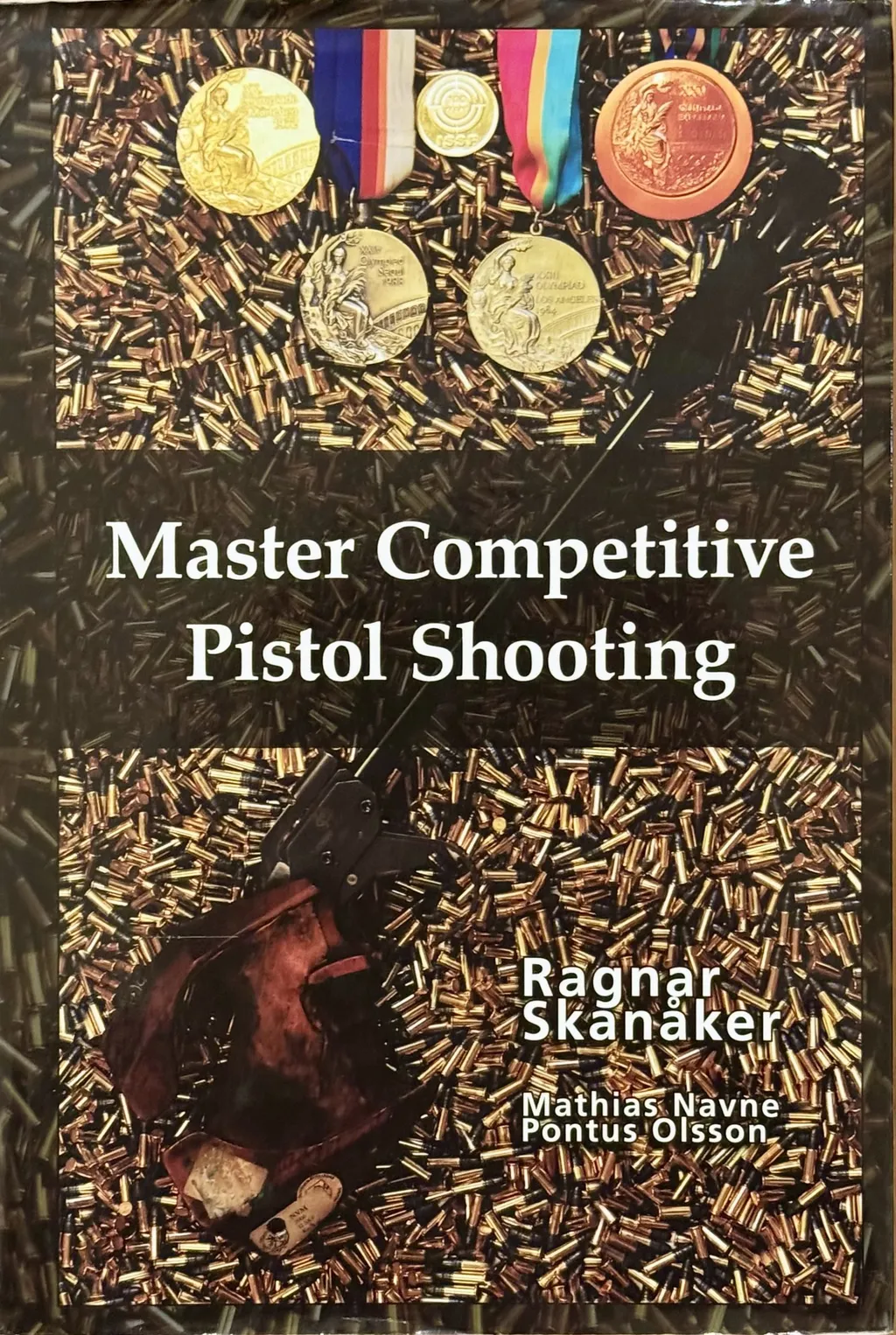
Master Competitive Pistol Shooting by Ragnar Skanåker, Mathias Navne and Pontus Olsson
Published
Master Competitive Pistol Shooting by Ragnar Skanåker, Mathias Navne, and Pontus Olsson is a comprehensive and experience-driven reference for serious pistol shooters and coaches. Written by one of the most accomplished pistol shooters in history together with elite-level contributors, the book bridges fundamental technique, ISSF event–specific execution, and applied sports science.
What sets this book apart is its clarity and practicality. The authors avoid unnecessary theory and focus instead on what actually produces results on the firing line: efficient technique, disciplined training habits, sound match tactics, and an understanding of the shooter’s body. It is equally valuable for advanced juniors, elite competitors, and coaches, serving both as a learning manual and a long-term reference.
Rather than promoting a single “ideal” style, the book emphasizes individual adaptation within proven principles, a philosophy strongly aligned with modern ISSF coaching methodology.
Main Structure of the Book
Part 1 – Basic Principles
Foundational knowledge applicable to all pistol disciplines.
-
Chapter 1: Safety Clubhouse, range, and home safety principles; responsible firearm handling.
-
Chapter 2: Basic Techniques
- Stance
- Grip
- Breathing control
- Sight picture and aiming
- Trigger control
- Coordination of aiming and firing
- Follow-through
-
Chapter 3: Evaluation and Correction Diagnosing and correcting errors related to aiming, triggering, stance, grip, and concentration.
-
Chapter 4: Special Technique Training Focused drills for stance, grip, aiming, trigger, follow-through, and concentration.
-
Chapter 5: Basic Equipment Pistols, sights, glasses, clothing, accessories, and equipment preparation.
Part 2 – ISSF Shooting Events
Event-specific adaptations of technique, training, and tactics.
-
Chapter 6: Free Pistol (50 m Pistol) Technique modifications, mental preparation, match tactics, and equipment.
-
Chapter 7: Rapid Fire Pistol Timing, rhythm, recoil management, aiming strategies, and tactical execution.
-
Chapter 8: Center Fire & 25 m Pistol Precision vs. rapid stage requirements, training structure, and match planning.
-
Chapter 9: Standard Pistol Time management, rhythm, recoil control, and competition tactics.
-
Chapter 10: Air Pistol Fine motor control, stability, precision triggering, and elite-level preparation.
Part 3 – Other Shooting Events
Overview of additional pistol disciplines beyond Olympic events.
- Field Shooting
- Precision Shooting
- PPC
- Bullseye Pistol Shooting
- Black Powder Pistol
Each chapter covers equipment, technique, and competition routines.
Part 4 – Medical Science for Pistol Shooting
Understanding the shooter’s body as a performance system.
-
Chapter 16: Anatomy Posture, aiming mechanics, grip, and trigger interaction.
-
Chapter 17: Physiology Physical fitness, circulation, visual function, and fatigue management.
Overall Assessment
Master Competitive Pistol Shooting is best described as a complete shooter’s handbook, grounded in Olympic-level experience and structured coaching logic. It rewards careful study and repeated reference, making it an essential resource for anyone aiming to progress from solid performance to consistent high-level results.