
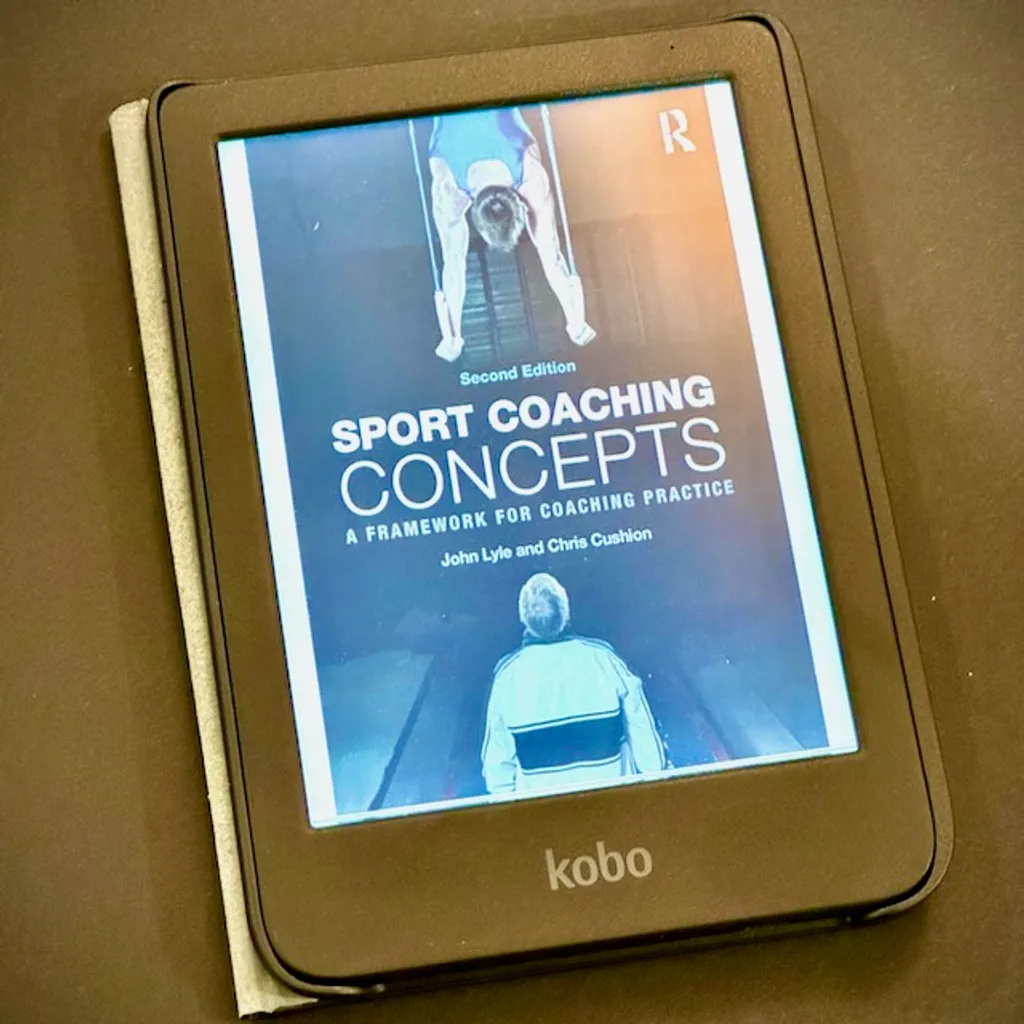
Sport Coaching Concepts
Sport Coaching Concepts by John Lyle and Chris Cushion is not a book you read for drills, exercises, or ready-made answers. Instead, it is a book you read to fundamentally rethink what coaching is, how it works, and why many well-intentioned coaching practices fail to deliver consistent long-term results. For anyone involved in coaching, teaching, or athlete development, this book offers something far more valuable than techniques: it offers clarity.
At its core, Sport Coaching Concepts argues that coaching is best understood as a decision-making process, not a collection of tips or motivational speeches. Lyle and Cushion carefully dismantle the idea that good coaching is primarily about knowledge transfer. Instead, they show that expert coaching is about judgment: deciding what to focus on, when to intervene, how much to say, and—just as importantly—when to say nothing at all.
One of the book’s greatest strengths is its insistence on distinguishing training from performance. This separation is often blurred in practice, with training sessions that look suspiciously like competitions and coaches who evaluate learning almost exclusively through short-term outcomes. Lyle and Cushion challenge this approach, emphasizing that learning environments should tolerate error, encourage exploration, and prioritize long-term development over immediate results. This idea resonates strongly across skill-based and precision sports, where chasing outcomes too early can actively interfere with skill acquisition.
The authors also introduce a clear framework for understanding different coaching domains, particularly the distinction between participation coaching and performance coaching. This is not a value judgment—both are important—but a recognition that different goals demand different methods. High-performance environments, the authors argue, require restraint, structure, and a deep respect for athlete autonomy. Over-coaching, excessive feedback, and constant correction are presented not as dedication, but as common sources of stagnation.
What makes Sport Coaching Concepts especially compelling is its balance between theory and practice. While grounded in academic research, the book consistently returns to real coaching behavior: what coaches actually do, how they make decisions under pressure, and how social, cultural, and organizational contexts shape those decisions. Coaching is presented not as an isolated technical act, but as a social process influenced by power, expectations, and tradition.
This is not a quick or light read. The book demands attention and reflection, and it rewards readers who are willing to question their assumptions. Its value grows over time; ideas encountered early in the book often gain new meaning as later chapters unfold. For coaches accustomed to prescriptive manuals, this may feel uncomfortable at first—but that discomfort is precisely the point.
In summary, Sport Coaching Concepts is a foundational text for modern coaching. It does not tell you what to coach, but it profoundly improves how you think about coaching itself. For those serious about developing athletes—and themselves—over the long term, it is an essential and quietly transformative read.
Affiliate link: I may earn a small commission at no extra cost to you.