
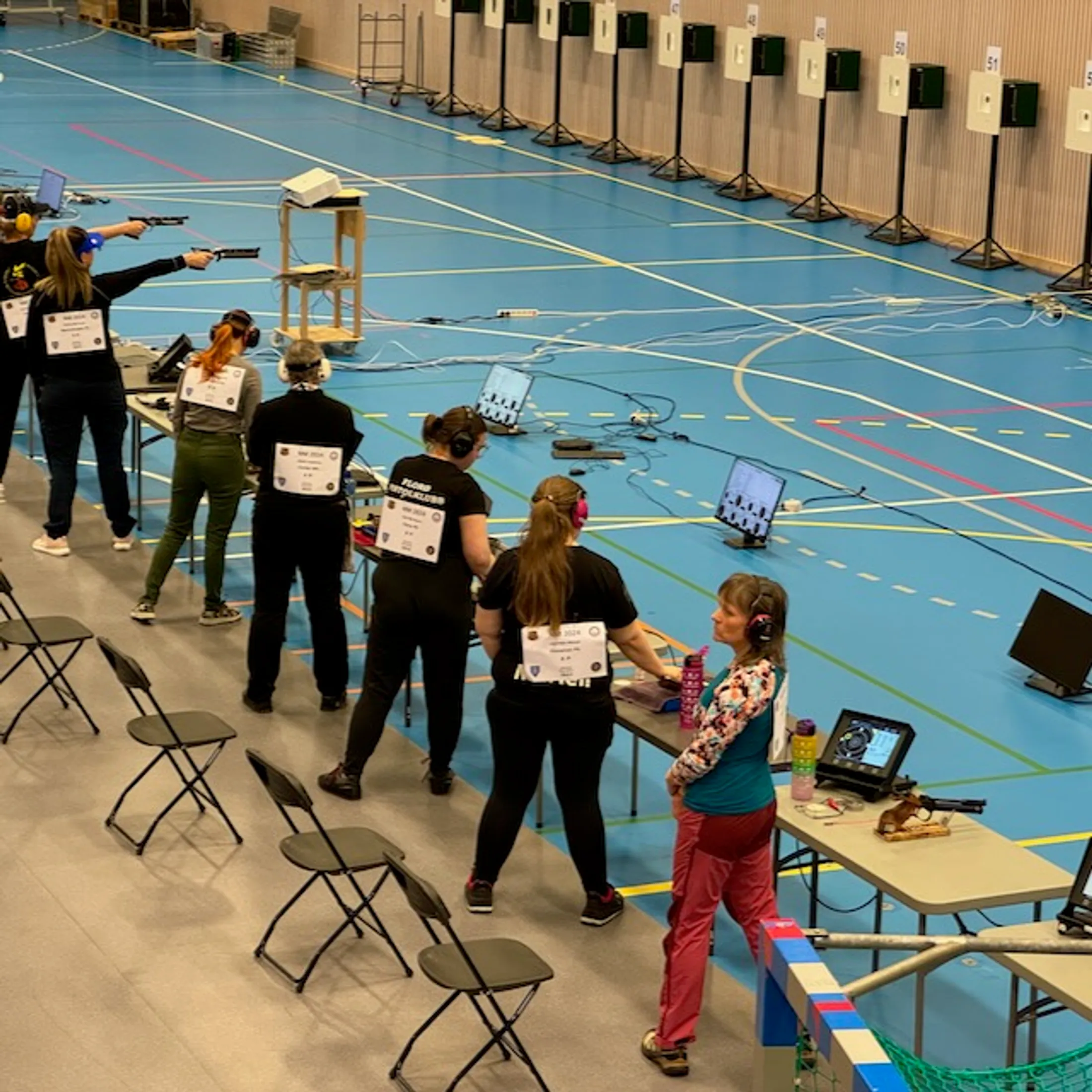


Many shooters assume tension appears only under pressure: competitions, finals, important shots. So when tension shows up during an easy training session, it feels confusing—or even discouraging.
But this experience is far more common than most shooters realize.
Tension doesn’t start with pressure
Tension is rarely caused by the situation itself. It is usually the result of how you train.
If your training sessions are built around:
- urgency (“I need to shoot well today”)
- constant evaluation (“that wasn’t good enough”)
- judgment after every shot
- chasing scores instead of executing process
then your nervous system never experiences calm shooting as a baseline. Even when the session is “easy,” your body behaves as if something is at stake.
Over time, this creates a habit: tension becomes the default state.
Why “trying to relax” doesn’t work
Many shooters respond by telling themselves to relax. This almost never helps.
Relaxation is not a command you give the body—it’s a state the body learns through repetition. If every repetition is performed with internal pressure, the body simply learns that shooting equals tension.
That’s why tension can appear even when:
- there is no match
- no one is watching
- the target feels unimportant
The body is repeating what it knows.
Calm execution must be trained deliberately
Calm shooting does not automatically emerge from technical training alone. It must be trained as a skill, just like trigger control or follow-through.
That means deliberately building sessions where:
- the goal is execution, not outcome
- shots are allowed to be imperfect
- attention stays on process, not result
- rhythm and breathing are prioritized over speed
These sessions teach the nervous system that it is safe to execute without urgency.
Pressure comes later—by design
Pressure should be added intentionally, not baked into every session.
If every training feels like a test, the shooter never learns a neutral baseline. When real pressure arrives, there is nowhere to retreat to—no calm reference point.
By first building relaxed, repeatable execution, you create a foundation that pressure can later sit on without collapsing your technique.
What to take to the range
If you feel tense during easy training, don’t treat it as a flaw. Treat it as information.
Ask yourself:
- Am I judging every shot?
- Am I rushing between shots?
- Am I training as if today’s result matters too much?
Then make space for sessions where the only objective is calm repetition.
Because once calm execution is learned, pressure no longer creates tension—it simply reveals what’s already stable.
References & Coaching Background
This perspective is not personal opinion. It reflects long-standing principles found in elite pistol coaching and sport psychology:
-
The Fundamentals of Olympic Pistol Shooting – Željko Todorović Emphasizes that correct technique must be built under low emotional load before pressure is introduced. Warns that constant evaluation during training hard-codes tension into execution.
-
Master Competitive Pistol Shooting – Ragnar Skanåker Describes calm execution as a trained baseline, not a competition skill. Repeatedly stresses that training urgency directly transfers into match tension.
-
Competitive Shooting – A. A. Yuryev Explains that unnecessary muscular and emotional tension arises from incorrect training structure rather than competition conditions themselves.
-
Competitive Sport Shooting: Practical Sport Psychology – Dr. Heinz Lösel M.D. Details how stress responses become habitual when training lacks deliberate calm phases, and why pressure tolerance must be developed progressively.
Across these sources, the conclusion is consistent: Calm shooting is learned behavior. If it isn’t trained, it won’t appear—no matter how easy the session feels.