
Finals Feel Completely Different. Why?
Finals aren’t just another match phase. The pressure, pace, and meaning change how decisions are made—and how shots are fired.

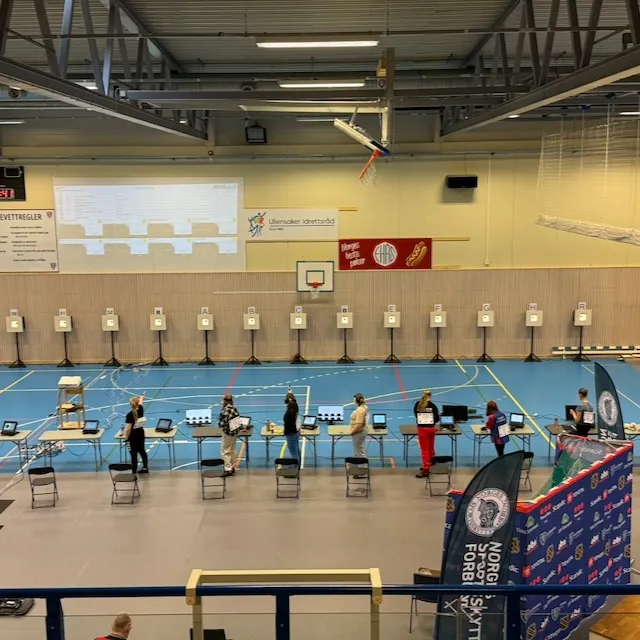
Finals feel completely different. Why?
 MORTEN’S ANSWER
Because they are. Don’t expect comfort—train decision-making under stress.
Finals are not qualification with an audience
Many athletes enter their first final believing it’s simply qualification shooting with better athletes and more noise.
That belief breaks down quickly.
Finals change the performance environment in three fundamental ways:
- The format becomes eliminative
- Time pressure becomes explicit
- Every decision is visible and irreversible
In qualification, mistakes are absorbed by volume.
In finals, mistakes are punished immediately.
This isn’t psychological weakness—it’s task reality.
Why your technique feels less reliable
Under final conditions, the brain reallocates resources.
- Attention narrows
- Threat detection increases
- Motor control becomes less tolerant of uncertainty
This is why:
- Holds feel shorter
- Trigger timing feels rushed
- You feel forced to decide instead of letting the shot develop
The technique hasn’t disappeared.
Your margin for indecision has.
Elite performance in finals is not about calmer shooting—it’s about faster, cleaner commitment.
Decision-making replaces comfort
In qualification, you often wait for a “good enough” moment.
In finals, waiting is the risk.
Every shot asks:
- Do I continue?
- Do I abort?
- Do I accept this sight picture?
Athletes who struggle in finals are rarely under-trained technically.
They are under-trained in making irreversible decisions under stress.
This is why finals specialists often look aggressive—not emotionally, but decisively.
Train the skill finals actually demand
If your training only rewards perfect execution, finals will feel hostile.
To prepare properly:
- Train with consequences, not just scores
- Practice one-shot accountability
- Introduce forced decisions (limited time, no restarts)
Examples:
- One-shot drills where the outcome matters
- Simulated eliminations in training
- Shot acceptance drills instead of shot perfection drills
You are not training to feel good. You are training to decide correctly when it feels bad.
The right expectation changes everything
Finals are not meant to feel stable, calm, or repeatable.
They are meant to:
- Test commitment
- Expose hesitation
- Reward decisiveness
When you stop expecting comfort, pressure loses its power.
Finals don’t ask:
“Can you shoot well?”
They ask:
“Can you choose, commit, and execute—now?”
That is a different skill. And it must be trained deliberately.
References
-
Ragnar Skanåker – Master Competitive Pistol Shooting
Emphasizes match tactics, mental preparation, and adapting technique under competition pressure, particularly in high-stakes environments. -
JP O’Connor – On the Firing Line (Selected articles: Critical Moments, Trying Not to Lose, Choking)
Discusses decision-making, performance under pressure, and why elite performance depends on commitment rather than emotional control. -
Dr. Heinz Lösel (ISSF) – Competitive Sport Shooting: Practical Sport Psychology
Provides foundational insight into anxiety, stress responses, and psychological preparation specific to shooting competitions. -
Marco Masetti – Front Sight
Introduces decision training, acceptance-based execution, and competition-focused practice models used with elite shooters. -
Frank L. Gardner & Zella E. Moore – The Psychology of Enhancing Human Performance (MAC Approach)
Explains why acceptance and commitment outperform control-based strategies in high-pressure performance settings.